
Repair Operations, AI and Right-to-Repair Advisory
We help manufacturers, brands, retailers, insurers, cities and repair networks understand, improve and scale their repair operations.
Process mapping, data and material flow analysis, benchmarking, AI use case assessment, innovation scouting and Right-to-Repair readiness — turned into a clear view of where you stand and the practical next steps to take.
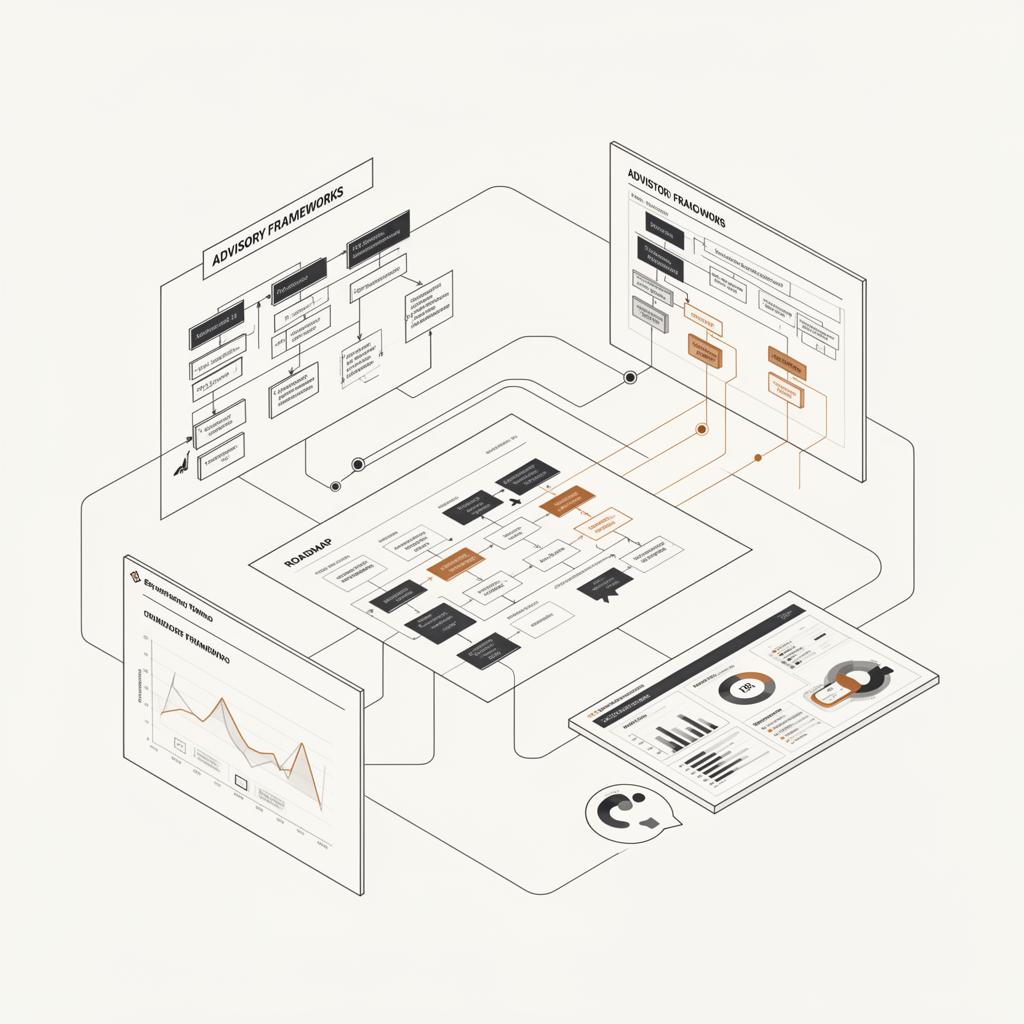

Our team helps companies across strategy, operations, and digital innovation. That can mean mapping user journeys and internal processes to find the biggest opportunity levers, prototyping new internal and external tools, then actually developing, shipping, and implementing them — or innovating new business models and helping launch entirely new ventures in the space.
A clear view of repair, end to end
Each advisory area answers a concrete question your operations, product and compliance teams already have.
| Advisory area | Typical questions we answer |
|---|---|
| Repair process assessment | How do repair cases move from first contact to resolution? Where are the delays? |
| Data and material flow mapping | Which data, spare parts, tools, devices and systems are involved? Where are gaps? |
| Bottleneck and benchmark analysis | How does the current setup compare to good practice in repair operations? |
| AI opportunity assessment | Where can AI reduce manual work, improve diagnosis or support service teams? |
| Innovation assessment | Which new tools are useful in practice, e.g. smartglasses for field repair? |
| Right-to-Repair readiness | Are parts, repair information, documentation and partner access ready for future requirements? |
| Pilot roadmap | Which improvement or technology pilot should be tested first? |
- Repair process assessment
How do repair cases move from first contact to resolution? Where are the delays?
- Data and material flow mapping
Which data, spare parts, tools, devices and systems are involved? Where are gaps?
- Bottleneck and benchmark analysis
How does the current setup compare to good practice in repair operations?
- AI opportunity assessment
Where can AI reduce manual work, improve diagnosis or support service teams?
- Innovation assessment
Which new tools are useful in practice, e.g. smartglasses for field repair?
- Right-to-Repair readiness
Are parts, repair information, documentation and partner access ready for future requirements?
- Pilot roadmap
Which improvement or technology pilot should be tested first?
How we're organised
Four practice areas. Pick what you need — every engagement is modular.
- Repair business case & P&L modeling
- Make vs. partner vs. acquire analysis
- Circular product strategy
- Pricing & warranty design
- Right-to-Repair readiness scoring
- Board-ready narrative & KPIs
- Network design (in-house, partner, hybrid)
- SLA & cost-to-serve modeling
- Workshop & field-service blueprint
- Parts and reverse-logistics setup
- Role definitions & RACI
- Tooling & systems map
- Pilot scoping & success criteria
- Country launch playbooks
- Partner onboarding at scale
- Change management & training
- Migration from legacy tools
- Post-launch optimization
- EU Right-to-Repair gap analysis
- Ecodesign & WEEE alignment
- CSRD repair & circularity disclosures
- CO₂e measurement framework
- Subsidy & funding navigation
- Regulator & auditor engagement
Repair operations are often more fragmented than they look on paper
For manufacturers and brands this is not only an operational topic. It affects cost, customer satisfaction, partner performance, service quality, compliance readiness and long-term product strategy.
- Incomplete customer intake
- Manual diagnosis and triage
- Repeated data entry
- Limited spare-parts visibility
- Weak handovers between teams and partners
- Inconsistent repair documentation
- Poor visibility across repair status and outcomes
- Limited use of repair data for product and service improvement
- Unclear AI priorities
- Right-to-Repair readiness gaps
Five workstreams, one coherent view
We usually structure advisory projects around five workstreams. Each runs in parallel and produces a concrete artefact you keep.
Repair flows across channels, teams and partners
Systems, data points, spare parts, tools and devices
Pain points and comparison to good practice
Parts, repair information, product data and partner enablement
AI, voice workflows and practical innovation pilots
The four lenses we use
Repair process, data and material flows, benchmarks, and Right-to-Repair readiness — assessed with one consistent method.
| Repair step | What we review |
|---|---|
| Customer intake | Phone, chat, forms, booking and first issue description |
| Diagnosis | Questions, fault classification and missing information |
| Routing | Field service, mail-in repair, partner repair or escalation |
| Scheduling | Appointment booking, technician allocation and customer confirmation |
| Field service | Job preparation, parts, tools, repair execution and reporting |
| Workshop or mail-in repair | Intake, diagnosis, repair, return logistics and status updates |
| Partner repair | Job forwarding, repair updates, evidence and invoicing |
| Closure | Documentation, customer update, repair outcome and follow-up |
- Customer intake
Phone, chat, forms, booking and first issue description
- Diagnosis
Questions, fault classification and missing information
- Routing
Field service, mail-in repair, partner repair or escalation
- Scheduling
Appointment booking, technician allocation and customer confirmation
- Field service
Job preparation, parts, tools, repair execution and reporting
- Workshop or mail-in repair
Intake, diagnosis, repair, return logistics and status updates
- Partner repair
Job forwarding, repair updates, evidence and invoicing
- Closure
Documentation, customer update, repair outcome and follow-up
Where AI and selected pilots create real value
From AI phone and chat intake to diagnosis, voice workflows, spare-parts support, documentation and quality checks — prioritised against your actual repair volume and cost structure.
| Area | Example use cases |
|---|---|
| AI phone intake | Capture issue, ask follow-up questions, create repair case |
| AI chat intake | Answer common questions, qualify issue, start booking |
| Issue diagnosis | Suggest likely fault, request missing information, classify case |
| Automated summaries | Summarise calls, technician notes and repair outcomes |
| Voice workflows | Update case, search parts, request next step by voice |
| Spare-parts support | Suggest required parts, flag availability risks |
| Repair documentation | Convert voice notes, photos and videos into structured records |
| Quality checks | Check evidence, photos, checklist completion and repair standard |
- AI phone intake
Capture issue, ask follow-up questions, create repair case
- AI chat intake
Answer common questions, qualify issue, start booking
- Issue diagnosis
Suggest likely fault, request missing information, classify case
- Automated summaries
Summarise calls, technician notes and repair outcomes
- Voice workflows
Update case, search parts, request next step by voice
- Spare-parts support
Suggest required parts, flag availability risks
- Repair documentation
Convert voice notes, photos and videos into structured records
- Quality checks
Check evidence, photos, checklist completion and repair standard
Hands-free access to instructions, documentation, communication, camera, audio and AI support during repair work — one practical example of the innovation pilots we scope.
What you keep
Every engagement produces concrete artefacts your teams can use long after the project ends.
Repair paths, teams, handovers, decisions and delays
Systems, data points, spare parts, tools, devices and returned products
Operational pain points and gaps versus good practice
Gaps in parts access, repair information, documentation and data readiness
Prioritised use cases across AI, voice workflows and innovation pilots
Quick wins, medium-term fixes and pilot options
One recommended AI, workflow, innovation or readiness pilot
Pick the depth that fits
Advisory work can be adjusted depending on the required depth, timeline and internal availability.
Quick first view before involving more teams
One repair channel or one priority issue
Clear operational view with practical next steps
Process, data, benchmarking, AI, innovation and readiness
More complete preparation for transformation or software decisions
More sites, partners, systems, compliance topics and pilot design
Move from assessment to testing
AI intake, workflow, innovation or Right-to-Repair readiness pilot
Who we work with
Ready to improve your repair operation?
Start with a focused assessment of your current repair process, data flows, bottlenecks, AI opportunities and Right-to-Repair readiness. Keep the scope lean, or expand it into a programme across teams, systems, partners and channels.